When I started spending serious time around electric two-wheel products, one thing became obvious pretty quickly: there was a gap in the market that a lot of riders could feel, even if they didn’t always know how to describe it.
On one side, you had traditional e-bikes that were fine for casual riding, but didn’t give experienced riders much excitement. On the other side, you had machines with real power, but too many of them were being used in ways that created confusion, risk, or both.
I kept seeing the same problem from different angles. Riders wanted performance. They wanted something fast, capable, and fun. But they also wanted something that made sense in the real world. They didn’t want to guess whether they were going to get stopped. They didn’t want to wonder whether they bought the wrong platform for how they actually planned to ride. And they definitely didn’t want to spend real money on something that felt exciting for a month and became a headache after that.
That is a big part of why I built RIF.
I did not want to build another product that depended on gray-area expectations or on the customer “figuring it out later.” I wanted to build something more honest.
That is why the lineup is split the way it is.
Fury and Race are for riders who want the street-legal side of the category. Banshee is for riders who want a true off-road custom build. To me, that distinction matters. I think the market has done a poor job of drawing clean lines for people, and in the long run that hurts riders more than it helps them. RIF positions Fury and Race as street-legal mopeds with MCO and VIN in the USA, while Banshee is the off-road-only custom build.
I also wanted to build bikes that felt like real bikes.
That may sound obvious, but it is actually one of the biggest issues in this category. A lot of machines are sold around headline numbers alone. More power. More speed. More hype. But that does not automatically create a better riding experience. I’ve spent enough time around these products to know that ride feel, support, setup, durability, and use-case honesty matter more than a flashy first impression.
That is why I approached RIF the way I did.
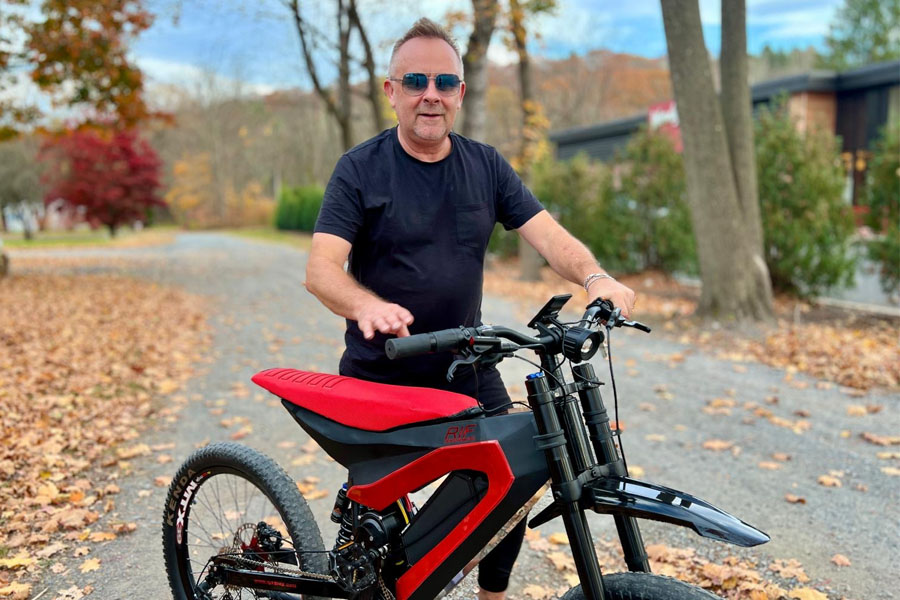
Fury is the flagship because I wanted a premium answer for the rider who wants the right bike the first time. Race exists because not everyone wants the same ride feel, weight, or overall character. Banshee exists because I still believe there is a real place for a lighter, true off-road custom build built around real MTB logic instead of pretending everything should be one kind of machine.
I also wanted real support behind the product.
If you are spending serious money on a high-performance electric bike, you should not be left with a mystery checkout page and no help afterward. You should be able to understand the product, see it, demo it, buy it through the official path, and get support after the sale. That was important to me from the beginning, and it is why RIF has a dealer flow, demo flow, support section, and official online checkout path.
There is also a personal side to this, even if that is not the whole story.
I’m a dad. My kids have grown up around this world. That doesn’t mean every product needs to be softened or watered down. It means I care about building things in a way that makes sense. I care about honesty. I care about being able to explain what a bike is, what it is for, and why it was built that way.
That is really what RIF is about for me.
Not less fun. Not less power.
Just a better answer.
If power is fun, legality is freedom. And in my view, the future of this category is going to belong to the brands that finally respect both.